
Design the whole resource system.
Strong infrastructure design considers connected physical systems together from the start.
Keystone considers compute, power, cooling, water, land, heat recovery, and adjacent uses together from the start of infrastructure design. This whole-system approach helps the team see dependencies, make tradeoffs visible, and evaluate where resources can support one another within the needs and constraints of a particular setting.
Continue belowWhole-system study
Every resource changes the design context around it.
Keeping these relationships visible helps teams evaluate tradeoffs before one choice limits another.
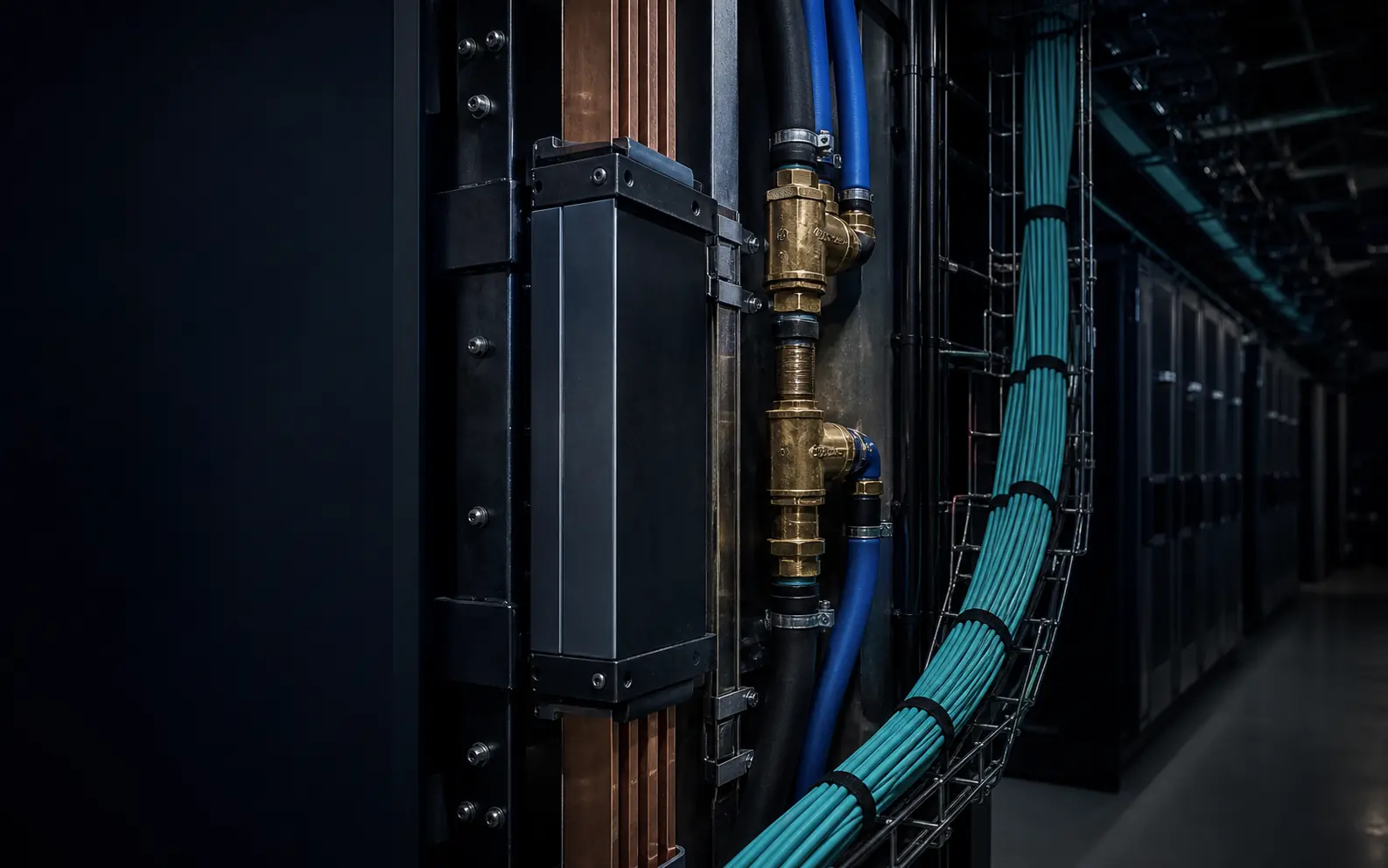
- Compute
- The workload and useful service the system must support.
- Power
- The source, quality, distribution, and operating conditions.
- Cooling
- The thermal system required by equipment and environment.
- Water
- How water use affects cooling choices and the wider resource system.
- Land
- The physical setting, constraints, and adjacent infrastructure context.
- Heat recovery
- Where useful heat can support nearby needs when conditions allow.
- Adjacent uses
- How surrounding uses may strengthen the wider infrastructure system.
Design discipline
A principle keeps the right questions in view.
It keeps dependencies, tradeoffs, and alternatives visible long enough to shape better decisions.
Start with the whole system
Consider physical inputs together before one assumption becomes another system's constraint.
Keep tradeoffs visible
Make the resource consequence of a design choice legible while it can still inform the work.
Test pathways against local fit
Evaluate heat recovery and adjacent uses against the needs and conditions of each site.

Company
Meet the people behind Keystone.
Learn about Keystone's leadership team and the experience behind its integrated infrastructure platform.